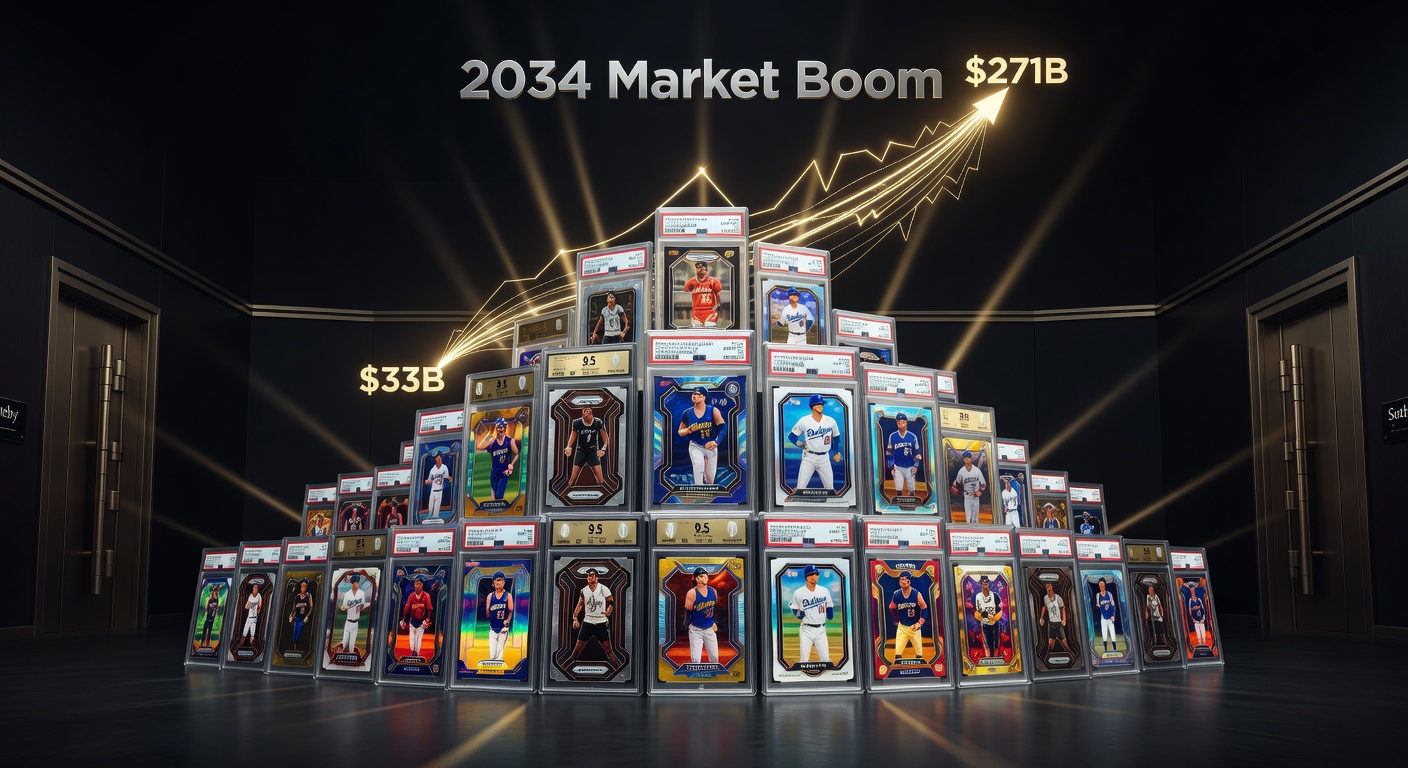
As the sports card market eyes unprecedented expansion, collectors and investors are at a crossroads where timely decisions could significantly influence their portfolios. With projections indicating a more than eightfold increase in market value over the next decade, this growth signals a maturation of sports cards from a niche pastime to a robust investment option, potentially reshaping how enthusiasts approach buying, selling, and holding cards. Right now, this development is particularly urgent, as it may attract new players and drive up competition, making it essential for current collectors to refine their strategies to preserve and enhance card values amid rising demand.
The sports card market is forecasted to balloon from $33.6 billion in 2024 to $271.2 billion by 2034, marking a profound evolution driven by several key factors. This surge reflects the hobby's transition from a fleeting trend amplified during the COVID era into a established alternative asset class, bolstered by a growing base of educated collectors who treat cards as serious investments rather than mere collectibles. Improved market infrastructure, including advanced grading services and online platforms, has enhanced transparency and accessibility, while expanded global demand from regions beyond traditional strongholds is fueling this upward trajectory, ultimately supporting higher card values and more stable market trends for savvy investors.
What This Means for Collectors and Investors
For collectors and investors, this projected growth underscores the need to adapt strategies to navigate an increasingly competitive landscape. As the market matures, card values for high-demand items, such as rookie cards of emerging stars, are likely to appreciate more steadily, but this also introduces risks like over-speculation, where overhyped cards could face corrections. Investors should prioritize diversification across different sports, eras, and player tiers to mitigate volatility, ensuring their collections align with long-term market trends rather than short-term fads, which could help secure better returns as institutional interest grows.
Beyond immediate value fluctuations, this expansion invites a strategic reassessment of acquisition and disposal tactics. Collectors might benefit from focusing on authenticated, graded cards to capitalize on the market's improving infrastructure, as these are more appealing to new entrants, including institutional buyers. Additionally, staying informed about emerging collector strategies, such as leveraging data analytics to predict player performance and card popularity, will be crucial for maintaining an edge, allowing investors to optimize their holdings for sustained growth in this evolving asset class.
Moreover, the influx of institutional capital could professionalize the market, potentially leading to standardized pricing and reduced fraud, which directly benefits individual collectors by enhancing the overall reliability of card values. This shift encourages a more analytical approach, where investors track metrics like sales volume and rarity indices to inform their decisions, transforming the hobby into a data-driven pursuit that rewards strategic planning.
The Bigger Picture
In the broader context, this market projection highlights significant implications for the global sports card ecosystem, including the potential for increased regulatory scrutiny as cards solidify their status as a legitimate investment vehicle. Investors should watch for advancements in technology, such as blockchain for provenance tracking, which could further stabilize market trends and open doors to international buyers, while economic factors like inflation might influence demand for tangible assets like cards. Forward-looking insights suggest that as global demand expands, collectors in regions with burgeoning sports cultures—such as Los Angeles, a hub for professional teams—could see localized booms, prompting strategies that incorporate geographic diversification to hedge against regional downturns.
As a concrete takeaway, collectors and investors should immediately audit their current holdings against these growth projections, focusing on high-potential cards that align with emerging market trends. By educating themselves on tools for valuation and timing sales, and perhaps consulting reputable market reports, individuals can position their collections for long-term success in this dynamic landscape, ensuring they not only weather potential shifts but also reap the rewards of this soaring market.