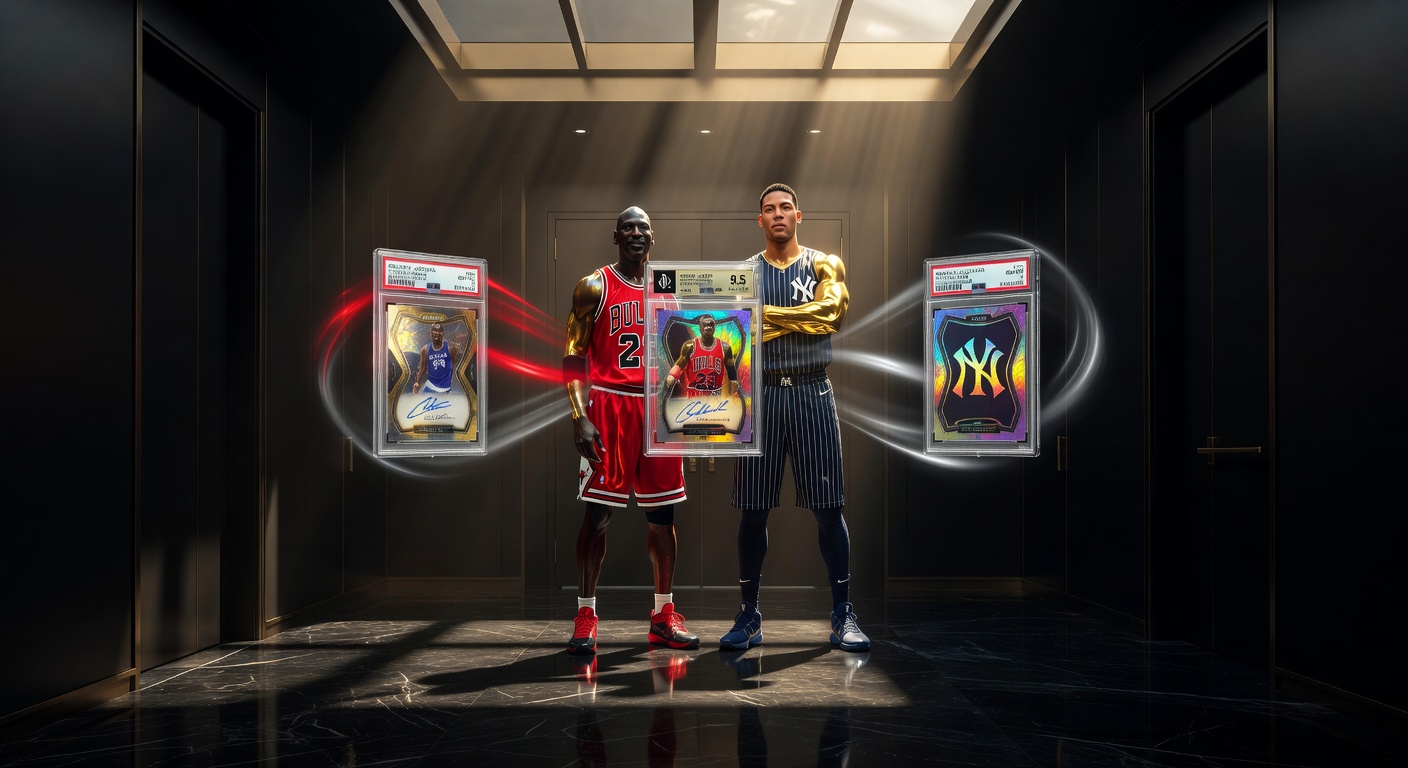
In the ever-evolving world of sports card collecting and investing, the recent surge in million-dollar sales serves as a powerful indicator of the market's resilience and potential for high returns. As we move into early 2026, these record-breaking transactions, including a dual-signed Michael Jordan/Kobe Bryant card and premium Aaron Judge pieces, underscore that demand for the rarest, most culturally iconic cards remains unwavering, even as broader economic factors introduce uncertainty. For collectors and investors alike, this momentum not only reaffirms the viability of sports cards as alternative assets but also prompts a reevaluation of portfolio strategies to capitalize on emerging opportunities in graded and serialized collectibles.
The context behind these headline-making sales reveals a deeper narrative about the sports card market's maturation and the factors driving value. At the center are three standout transactions: a dual-signed card featuring basketball legends Michael Jordan and Kobe Bryant from Los Angeles, which highlights the enduring appeal of cross-generational icons; an Aaron Judge Superfractor, a highly sought-after, gem-mint graded card that fetched $5.2 million due to its rarity and the player's status as a modern baseball star; and an Ohtani/Judge Dual Logoman 1/1 card, a one-of-a-kind item that sold for $2.16 million, emphasizing the premium placed on unique, autographed parallels. These sales, occurring in the first part of 2026, demonstrate sustained interest in cards that are not only graded for authenticity and condition but also carry significant cultural weight, such as those linked to players who transcend their sports. This trend reflects a broader shift where collectors prioritize items with proven provenance and scarcity, as evidenced by the high prices commanded by serial-numbered and autographed inserts, which continue to outperform standard issues in auctions and private sales.
What This Means for Collectors
For sports card collectors and investors, these mega-sales signal a validation of strategies focused on acquiring and holding graded vintage and modern premium cards, potentially leading to increased competition and elevated values across similar assets. The $5.2 million price tag on the Aaron Judge Superfractor, for instance, illustrates how player performance and cultural relevance can amplify demand, encouraging collectors to target cards of emerging stars or legends like Jordan and Bryant, whose items maintain long-term appreciation. This development underscores the importance of diversification within collections, where focusing on serial-numbered parallels and rare inserts could mitigate risks associated with market fluctuations, as these segments have shown resilience in past cycles.
Beyond immediate value boosts, the sales highlight strategic considerations for portfolio management, such as the benefits of professional grading to enhance a card's marketability and perceived worth. Collectors might now prioritize cards from sets known for their scarcity, like those featuring dual autographs or 1/1 variants, as these have demonstrated the ability to command premium prices regardless of broader market conditions. However, this also means heightened awareness of authentication processes and market timing, as the influx of high-end transactions could lead to temporary overvaluation in certain categories, requiring investors to balance enthusiasm with due diligence.
In analyzing these trends, it's clear that the sustained demand for culturally significant cards like the Ohtani/Judge Dual Logoman 1/1 offers a roadmap for refining acquisition strategies, emphasizing the need for research into player trajectories and card scarcity to optimize returns. This insight encourages a more proactive approach, where collectors assess not just current values but also potential catalysts, such as player milestones or anniversaries, that could further drive interest.
The Bigger Picture
The broader implications of these sales point to a high-end sports card market that continues to gain momentum, even as the overall industry matures and faces challenges like increased supply of modern cards. Looking ahead, collectors should watch for shifts in auction dynamics and grading standards, as these could influence future valuations and create opportunities in underserved areas, such as cards from non-mainstream sports. Forward-looking insights suggest that while the demand for rare inserts and graded cards persists, external factors like economic stability and digital collectible integration may shape the next wave of growth, urging investors to stay attuned to evolving trends for informed decision-making.
As a concrete takeaway, sports card collectors and investors should consider conducting a thorough review of their holdings, focusing on grading underappreciated assets and exploring acquisition of high-potential rare variants to align with the current market strength. By prioritizing quality over quantity and staying informed on emerging sales data, individuals can position themselves to leverage these trends for sustained portfolio growth in 2026 and beyond.