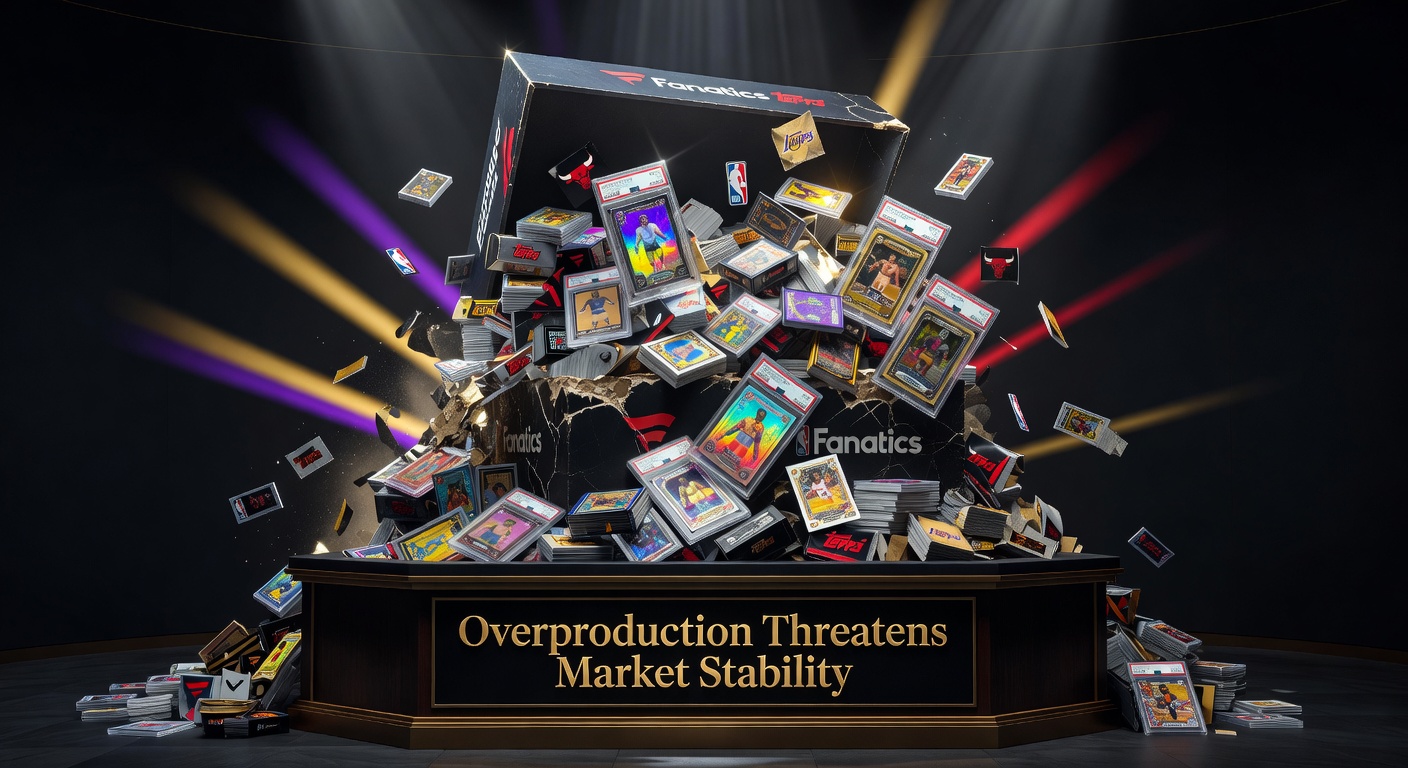
As the sports card market braces for a surge in production from Fanatics and Topps for 2026 NBA products, collectors and investors are facing an immediate threat to their portfolios. With over 429 million cards entering the market, the resulting oversupply could erode values faster than anticipated, echoing the chaos of the 1990s junk wax era. This development demands urgent attention, as it could undermine the stability of modern collections and force a reevaluation of investment strategies right now.
The situation stems from a significant ramp-up in card production, particularly for NBA sets, where Fanatics and Topps have generated an abundance of base cards and their parallel versions. This overproduction creates conditions similar to the junk wax era of the early 1990s, when an influx of cards led to a market collapse due to diminished scarcity and demand. In that period, the market was flooded with common cards that lost substantial value over time, and today’s scenario mirrors this by saturating the supply chain with readily available items. For collectors and investors, this means that base cards and even some parallels are already experiencing declining values, as the ease of acquisition dilutes their appeal and potential for appreciation. This shift not only affects current holdings but also influences future purchasing decisions, emphasizing the need to understand how production levels directly impact market trends and card values.
What This Means for Collectors
For sports card collectors and investors, the overproduction wave signals a pivotal shift in strategy to safeguard investments. Traditionally, building collections around base cards from modern sets offered accessible entry points, but with values plummeting due to oversupply, reliance on these items could lead to significant losses. Instead, savvy collectors might pivot toward scarce cards or those that have been professionally graded, as these maintain or even increase in value amid market fluctuations. This analysis underscores the importance of diversification, where focusing on limited-edition releases or vintage items provides a buffer against the devaluation of commonplace products.
Moreover, the parallels between today’s market and the junk wax era highlight the risks of speculative buying in an oversaturated environment. Investors should scrutinize production reports and sales data more closely, adjusting their approaches to prioritize authenticity and rarity over quantity. By doing so, collectors can refine their strategies to align with enduring market trends, such as the growing demand for high-grade, authenticated cards that resist the pressures of overproduction.
In practical terms, this means reassessing portfolios to identify vulnerable assets, like ungraded modern base cards, and reallocating resources toward more resilient options. The key takeaway here is that proactive adaptation—through education on grading standards and historical market patterns—can help mitigate risks and preserve long-term value in collections.
The Bigger Picture
The broader implications of this overproduction extend beyond immediate value drops, potentially reshaping the entire sports card ecosystem for years to come. As market trends evolve, we may see a correction phase where only the most desirable cards, such as those with unique features or from limited runs, command premium prices, while the rest languish in obscurity. Collectors should watch for indicators like auction results and inventory levels from major distributors, as these will signal whether the market is stabilizing or facing further declines. Forward-looking insights suggest that companies like Fanatics and Topps might respond by scaling back production in response to collector feedback, but this could take time, making it essential to monitor industry announcements and economic factors influencing demand.
Closing the loop, a concrete action for collectors and investors is to conduct a thorough audit of their collections now, prioritizing the sale or storage of high-risk items like abundant base cards from 2026 sets. By shifting focus to verified, scarce assets, you can not only protect your investments but also position yourself for potential rebounds in a more balanced market. This strategic move ensures that your passion for sports cards remains a viable and rewarding pursuit amid ongoing challenges.