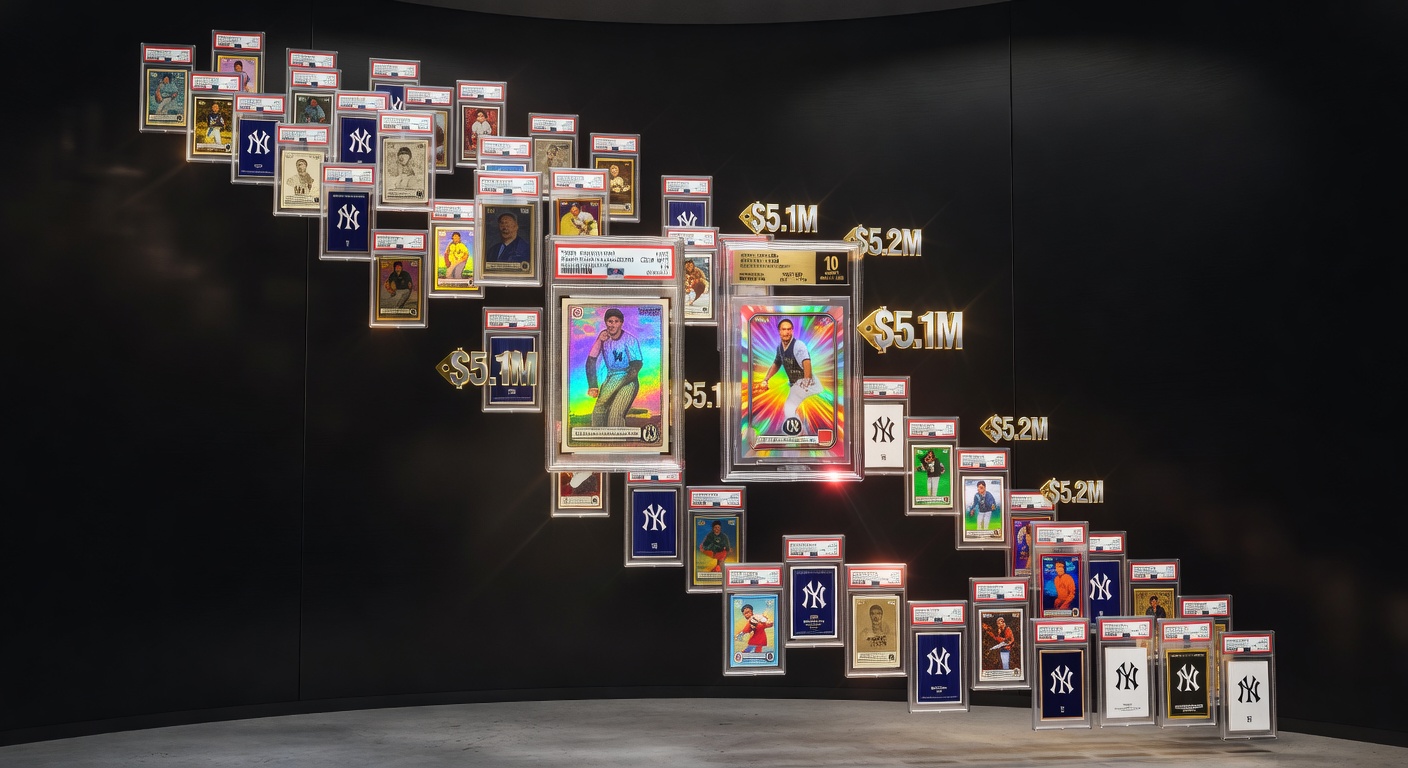
The surge in million-dollar sports card sales is reshaping the landscape for collectors and investors right now, as over 40 cards have crossed the seven-figure threshold since the start of 2025, signaling unprecedented demand and potential for substantial returns. This momentum, highlighted by early 2026 transactions like a $5.1 million Honus Wagner card and a $5.2 million Aaron Judge Superfractor, underscores a market that's not only thriving but also evolving rapidly, prompting immediate strategic considerations for those holding or seeking high-value assets. For sports card enthusiasts and investors, this explosive growth means opportunities for portfolio appreciation but also heightened risks from market volatility, making it crucial to assess current holdings against emerging trends.
To fully grasp this phenomenon, it's essential to contextualize the rapid escalation in high-end sales within the broader sports card market. Since the beginning of 2025, more than 40 cards have achieved million-dollar status, a trend that builds on previous years' activity and reflects growing recognition of sports cards as viable alternative investments. Notable examples include the February 2026 sale of a Honus Wagner card for $5.1 million, a legendary piece that exemplifies the enduring value of vintage items, and a $5.2 million Aaron Judge Superfractor, which highlights the rising appeal of modern, limited-edition cards featuring contemporary stars. Industry analysts suggest that 2026 could eclipse the 2021 record of 43 such sales, potentially reaching 50 or more, driven by factors like collector confidence and institutional interest. This escalation directly influences card values by creating a feedback loop: as high-profile sales draw more attention, demand intensifies, pushing prices upward for similar items and encouraging collectors to refine their strategies around scarcity, condition, and player popularity to maximize returns.
What This Means for Collectors
For sports card collectors and investors, the recent wave of million-dollar transactions represents both a validation of the hobby's investment potential and a call to action in adapting to shifting market dynamics. The sustained momentum, with sales like the Honus Wagner and Aaron Judge cards setting new benchmarks, suggests that card values for top-tier items are likely to continue appreciating, particularly for rare vintage cards and high-grade modern parallels. This trend encourages a strategic focus on diversification—balancing portfolios with a mix of established classics and emerging stars—to mitigate risks associated with overexposure to any single category, such as the potential downturn in modern cards if player performance wanes. Collectors should also prioritize thorough grading and authentication processes, as these elements significantly influence resale value in a market where even minor condition differences can mean hundreds of thousands in price gaps.
Beyond immediate value implications, this surge prompts a reevaluation of acquisition strategies, such as targeting auctions or private sales that feature proven high-demand cards. For instance, investors might analyze past sales data to identify patterns, like the premium placed on Superfractor variants, and adjust their buying habits accordingly to capitalize on upward trends. However, it's vital to remain cautious of market bubbles; while the influx of wealthy collectors bolsters overall confidence, an overemphasis on speculative purchases could lead to corrections, emphasizing the need for disciplined, research-driven approaches that align with long-term collector strategy.
The Bigger Picture
In the broader market context, the explosion of million-dollar sales points to deeper implications for the sports card industry, including increased institutional involvement and a potential shift toward more formalized investment vehicles. As collector confidence grows, evidenced by the 2026 projections of surpassing previous records, investors should watch for external factors like economic conditions or regulatory changes that could impact market trends, such as fluctuations in grading standards or the entry of new platforms for trading. Forward-looking insights suggest that this momentum could attract more professional investors, further professionalizing the hobby and possibly leading to innovations in authentication or digital collectibles, which savvy collectors might explore to stay ahead of value appreciation curves.
As a concrete takeaway, sports card collectors and investors should conduct a comprehensive review of their portfolios now, assessing which cards align with current high-demand trends and considering selective sales or acquisitions to optimize for the anticipated growth in 2026. By staying informed and proactive, you can position yourself to not only preserve but enhance your investments in this dynamic market.