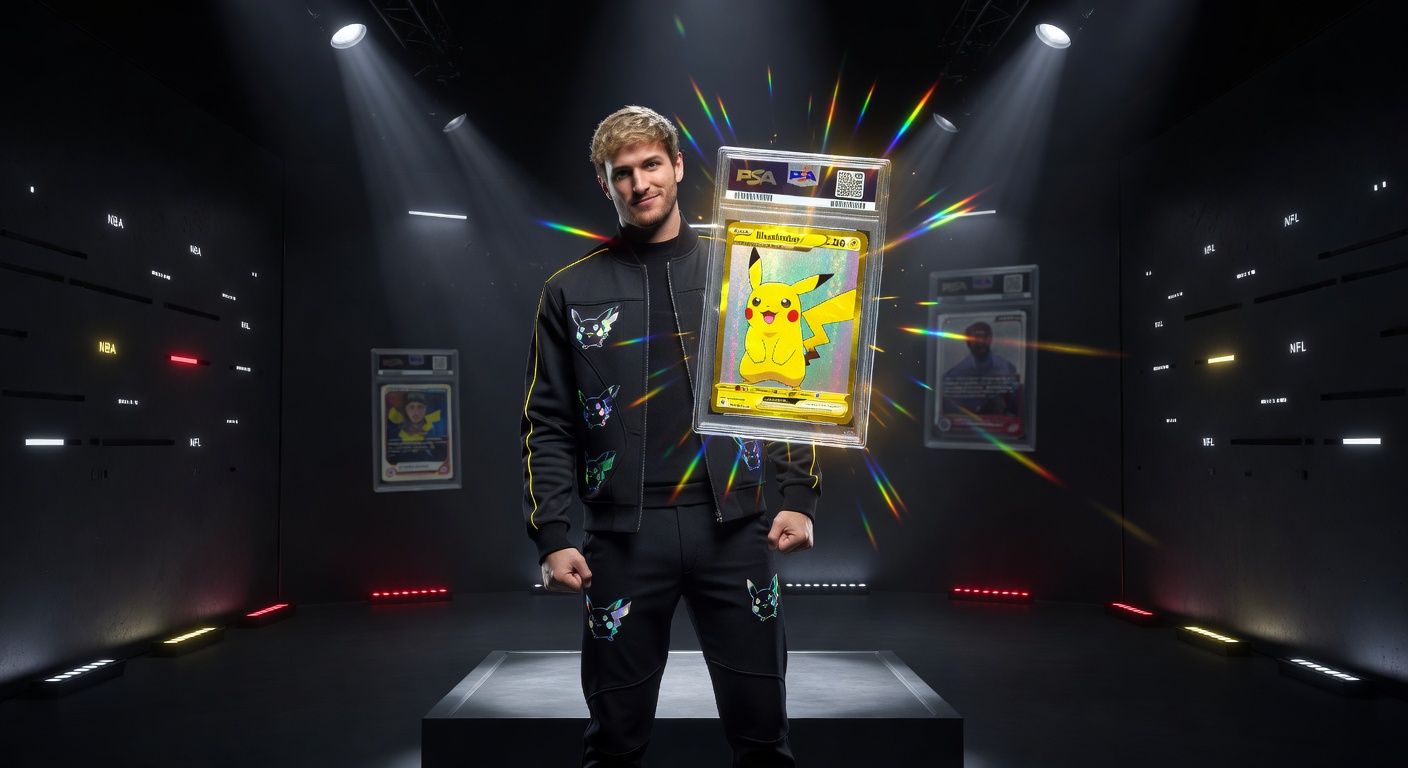
The record-breaking sale of a PSA 10 Pikachu Illustrator card for nearly $16.5 million underscores the surging demand for ultra-rare collectibles, a trend that directly impacts sports card collectors and investors by elevating overall market standards and valuations. As trading card game (TCG) assets increasingly rival traditional investments, this event signals that even niche categories like Pokémon can command prices that reshape expectations for sports cards, prompting collectors to reassess their portfolios amid heightened competition and scrutiny. Right now, this sale serves as a wake-up call for the community, highlighting how celebrity involvement and media exposure can accelerate value appreciation in ways that could soon affect cards from leagues like the NBA or NFL.
In a transaction that captivated the collectibles world, Logan Paul's PSA 10 Pikachu Illustrator card fetched just under $16.5 million on February 16, 2026, during an auction featured on Netflix's *King of Collectibles: The Goldin Touch*. This particular card, one of the rarest in the Pokémon series, achieved a perfect grade from Professional Sports Authenticator (PSA), making it exceptionally desirable among enthusiasts. The sale not only marks the highest price ever paid for a trading card but also reflects broader market dynamics, where scarcity, condition, and cultural nostalgia drive unprecedented bidding wars. For sports card collectors, this event parallels the high-stakes auctions of gems like Mickey Mantle's rookie card, illustrating how TCG markets are maturing and potentially influencing grading standards, auction platforms, and investor strategies across all card categories.
What This Means for Collectors
For collectors and investors in sports cards, this monumental sale amplifies the importance of rarity and condition as key determinants of value, urging a strategic shift toward acquiring and preserving top-graded assets. As Pokémon cards demonstrate, items with perfect PSA 10 ratings can command exponential premiums, which may pressure sports card owners to prioritize professional grading services to maximize their holdings' potential. This trend could lead to increased demand for grading from services like PSA, potentially lengthening wait times and raising costs, thereby affecting how collectors budget for authentication in an increasingly competitive market.
Beyond grading, the sale highlights the role of market trends such as celebrity endorsements and media coverage in boosting card values, encouraging sports card enthusiasts to explore crossovers like athlete-owned collections or partnerships with platforms like Netflix. Collectors might need to adapt their strategies by diversifying into TCGs or seeking out cards with strong pop culture ties, as these elements can enhance liquidity and resale opportunities. Ultimately, this event serves as a reminder that emotional and speculative factors, not just historical significance, play a crucial role in valuation, prompting investors to conduct more thorough market research before acquisitions.
In terms of collector strategy, the Pikachu sale underscores the risks of market volatility, advising a balanced approach that includes holding cards for long-term appreciation rather than short-term flips. By analyzing how this sale correlates with recent sports card auctions, collectors can better gauge price floors and ceilings, using tools like sales data tracking to inform decisions and mitigate overexposure in any single category.
The Bigger Picture
This record-shattering transaction points to explosive growth in non-sports TCG markets, which could spill over into sports cards by driving overall interest and inflating valuations for parallel rarities. As demand for Pokémon and similar cards surges, collectors should watch for ripple effects, such as increased auction activity on platforms like Goldin, and potential shifts in supply chains that might affect the availability of high-grade sports cards. Forward-looking insights suggest that as TCGs gain mainstream legitimacy, investors may see more institutional involvement, like from funds or advisors, necessitating a keen eye on regulatory changes and market consolidation to navigate emerging opportunities and threats effectively.
In closing, sports card collectors and investors should view this sale as a pivotal moment to refine their strategies, emphasizing the verification of card authenticity and the monitoring of broader collectibles trends. A concrete action step is to review your current inventory with a focus on high-grade items, consulting resources from reputable sources to align your collection with evolving market dynamics for sustained growth and protection against downturns.