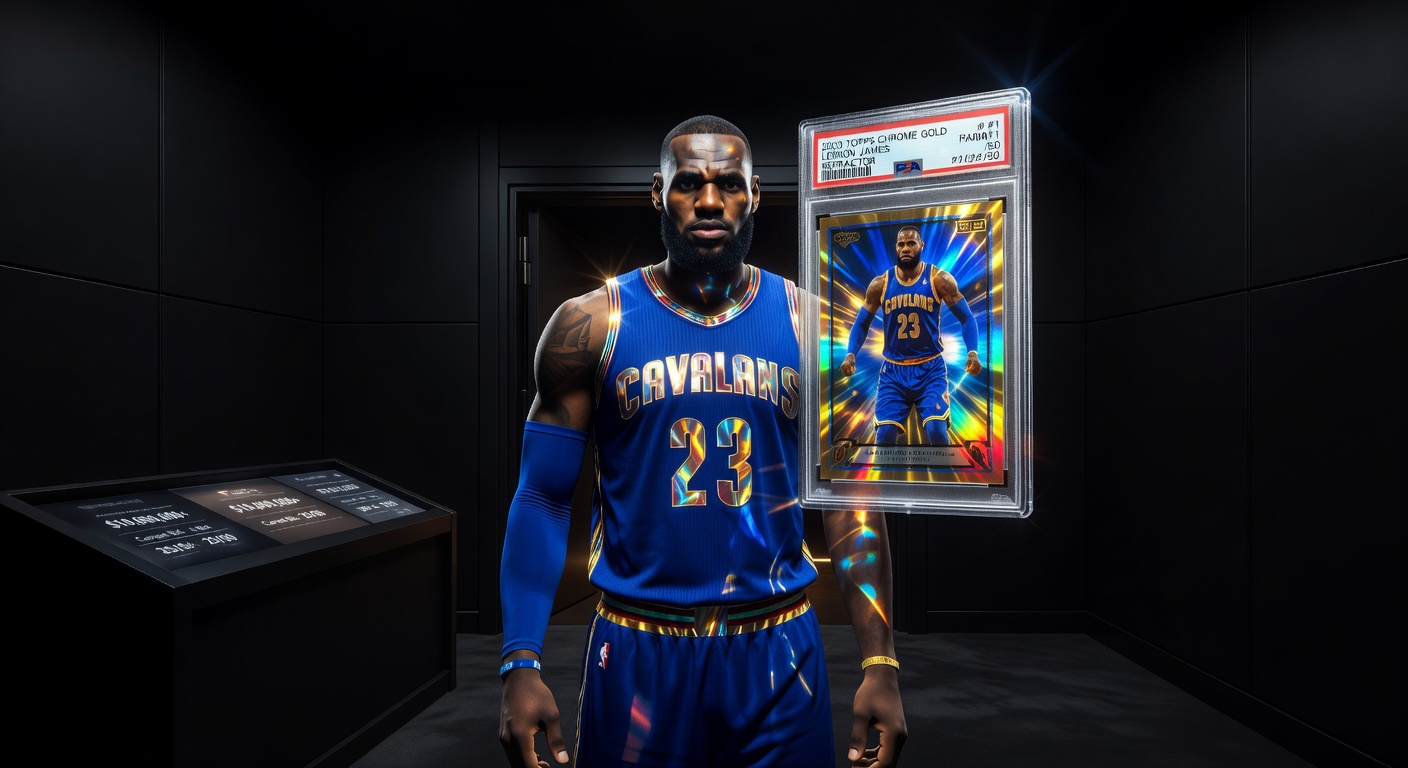
In an era where economic uncertainty often shakes investor confidence, the sale of a LeBron James card for $1.11 million at a Fanatics auction in early February 2026 serves as a powerful reminder of the sports card market's resilience. This record-breaking transaction not only elevates the status of elite athlete memorabilia but also reinforces the potential for substantial returns on high-quality collectibles, urging collectors and investors to reassess their portfolios amid ongoing market fluctuations. For those tracking card values, this event highlights how iconic player cards can transcend temporary downturns, offering a hedge against volatility in traditional investments.
The card in question is a 2003 Topps Chrome Gold Refractor of LeBron James, graded PSA 10, which sold for $1.11 million, marking a pinnacle in sports card auctions. As a PSA 10 /50 parallel, it represents one of only 50 produced, making it extraordinarily rare and highly coveted among enthusiasts. LeBron James, whose career spans over two decades of dominance in the NBA, has now seen 25 of his cards surpass the million-dollar threshold, a testament to his enduring legacy and the sustained demand for items linked to his early career. This particular sale, conducted through Fanatics, underscores the premium placed on vintage parallels in pristine condition, where factors like grading and scarcity directly influence market pricing and investor interest.
What This Means for Collectors
For sports card collectors and investors, this transaction signals a deepening appreciation for rarity and condition as key drivers of value in the market. The $1.11 million price tag for a PSA 10 LeBron James card illustrates how meticulous grading can transform a collectible into a blue-chip asset, encouraging strategies that prioritize professional authentication to mitigate risks associated with counterfeit or lower-grade items. Collectors might now pivot towards acquiring similar vintage parallels from iconic players, as this sale demonstrates how historical significance amplifies demand, potentially leading to exponential growth in portfolio values over time.
Beyond immediate financial implications, this event prompts a strategic reevaluation of diversification within collections. Investors should consider the role of player legacy cards in balancing risk, as LeBron's consistent performance in breaking records mirrors the stability these cards offer in volatile markets. By focusing on athletes with long-term cultural impact, collectors can develop more robust strategies that align with emerging trends, such as the increasing intersection of sports memorabilia with digital assets or celebrity endorsements, thereby enhancing overall market positioning.
In the broader landscape, this sale reflects ongoing shifts in market trends that favor high-net-worth individuals seeking tangible investments. It highlights how elite cards maintain their allure despite broader economic challenges, with auction houses like Fanatics playing a pivotal role in setting benchmarks. Looking ahead, collectors should monitor developments in grading standards and auction platforms, as innovations could further influence pricing dynamics and open new avenues for investment.
The Bigger Picture
The LeBron James card sale underscores the enduring investment value of premium sports cards, even as the market navigates volatility from factors like inflation or shifting consumer interests. This transaction suggests that elite condition vintage parallels will continue to command high prices, potentially driving up demand for similar items and creating ripple effects across related segments, such as modern parallels or rookie cards. Forward-looking insights indicate that as more high-profile auctions occur, collectors should watch for trends in population reports from grading companies, which could signal opportunities or overvaluations in the market.
Closing out, savvy collectors and investors should view this as a cue to refine their strategies by prioritizing rarity assessments and condition verification before acquisitions. A concrete action: Conduct thorough research on upcoming auctions and consider consulting market analyses to identify undervalued assets, ensuring your collection not only preserves value but also positions you for future gains in the evolving sports card ecosystem.