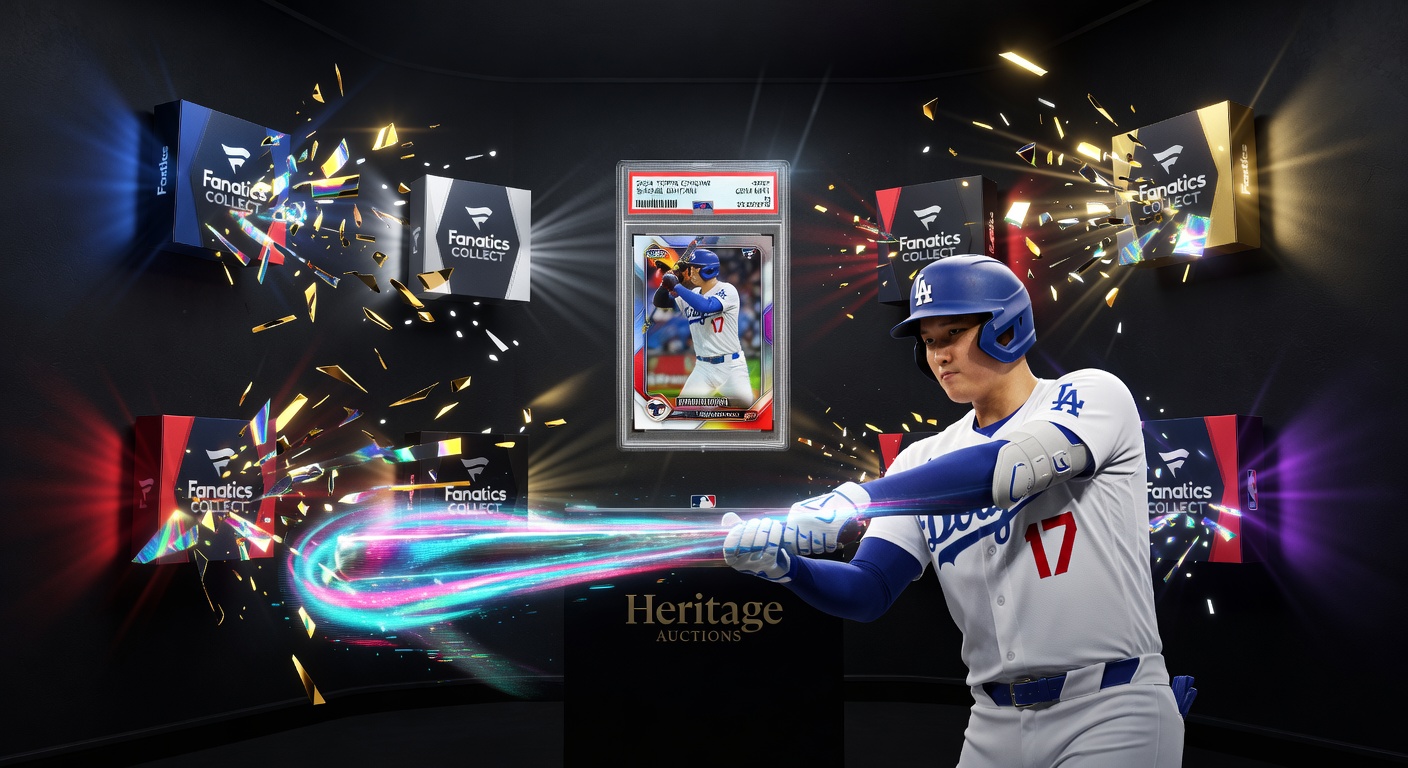
As Fanatics solidifies its grip on the sports card industry by securing licenses for MLB, NFL, and NBA by mid-2026, collectors and investors face immediate implications for card values and market dynamics. This unprecedented consolidation could reshape how products are released, potentially driving up demand for current holdings as competition diminishes. Right now, savvy investors must evaluate their portfolios, as shifts in supply and exclusive offerings may alter price trajectories and investment strategies overnight.
Fanatics began its ascent in the sports card world with the 2022 acquisition of Topps, a move that already positioned the company as a dominant force in trading card production. Now, with plans to fully control the three major professional sports licenses by mid-2026—culminating in the April 2026 takeover of the NFL license—Fanatics is on track to eliminate significant competition in the market. This development stems from strategic deals that grant the company exclusive rights to produce and distribute official trading cards for these leagues, building on its existing partnerships and leading to a more streamlined, yet potentially monopolistic, approach to product offerings. For collectors and investors, this means a shift from the diverse landscape of past years, where multiple manufacturers like Panini competed with Topps, to a scenario where Fanatics holds unprecedented sway over card designs, release schedules, and retail strategies, all of which could influence scarcity, pricing, and long-term market trends.
What This Means for Collectors
In this new era of consolidation, collectors should prepare for potential stabilization in card prices due to reduced competition, as Fanatics gains full control over supply chains and product lines. With no rival manufacturers vying for the same licenses, the market may see fewer variants and reprints, which could enhance the value of existing cards from other producers by making them rarer collectibles. However, this monopoly also raises concerns about innovation; while Fanatics has promised exciting new designs and exclusive releases, investors need to monitor how these changes affect demand, as overproduction in a controlled environment could lead to market saturation and depressed values for certain sets. Collector strategy will need to adapt, focusing on acquiring cards from current limited-edition drops or diversifying into niche areas like minor league or international sports cards to mitigate risks.
Furthermore, the elimination of competing product lines might streamline the hobby for newcomers but could challenge seasoned investors who relied on price fluctuations driven by multiple brands. For instance, the excitement around exclusive releases could boost the appeal of high-end cards, potentially increasing their resale value, but it also means collectors must be more discerning about authenticity and market timing. Overall, this shift underscores the importance of staying informed on release announcements and adjusting buying strategies to capitalize on market trends that favor scarcity and exclusivity under Fanatics' unified control.
The Bigger Picture
The broader market implications of Fanatics' dominance extend beyond immediate product changes, potentially fostering innovation in digital collectibles and global distribution while posing risks of reduced variety and higher barriers for new entrants. Investors should watch for how this consolidation influences overall industry growth, such as partnerships with online platforms that could expand access to cards worldwide, thereby affecting global demand and pricing. Looking ahead, forward-thinking collectors might anticipate regulatory scrutiny on monopolistic practices, which could introduce new dynamics like mandated collaborations or alternative licensing opportunities, reshaping card values in unpredictable ways.
As we move toward mid-2026, keeping an eye on economic factors like inflation and consumer spending will be crucial, as they could amplify or dampen the effects of Fanatics' control on the secondary market.
In conclusion, collectors and investors should view this consolidation as a signal to reassess their strategies, prioritizing diversification and research into upcoming releases to safeguard and potentially enhance their collections. A concrete action step is to track Fanatics' announcements closely and consider liquidating or holding specific cards based on projected supply changes, ensuring you're positioned to navigate the evolving landscape of sports card investing effectively.